ReferenceInternational Business Law
Evidence gathering in the USA for international arbitration
In the United States, the discovery process is used to prepare for trial. Also in international arbitration?
Background
In US litigation, the parties prepare for trial through the discovery process.
Each party can systematically obtain evidence and information from the other party. This lets it support its own case or find weak points in the other side’s case. The tools include depositions, requests for document production, requests for admissions, and witness testimony. Subpoenas can also be used to obtain evidence from non-parties.
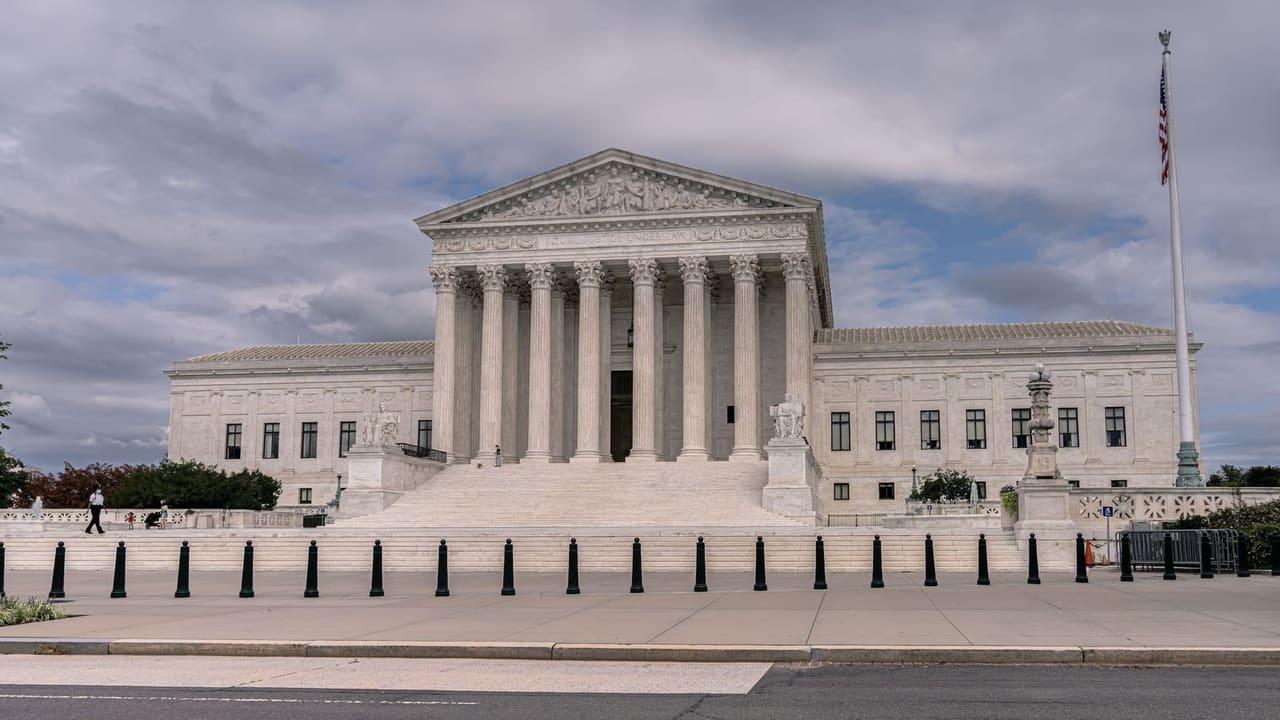
The US Supreme Court decided ZF Automotive US, Inc. v. Luxshare, Ltd. on 13 June 2022.1 Under this ruling, the parties to a private arbitration seated outside the US cannot ask US federal courts for discovery under 28 U.S.C. § 1782(a). Private here means any arbitration that companies agree on in a contract.
The first sentence of 28 U.S.C. § 1782(a) reads:
In the underlying case, Luxshare, a Hong Kong company, asserted claims against ZF Automotive arising from an acquisition. ZF Automotive is an automotive supplier based in Michigan and a subsidiary of a German company. In the purchase agreement, the parties had agreed to resolve all disputes under the arbitration rules of the German Institution of Arbitration (DIS). To prepare for a DIS arbitration against ZF, Luxshare applied to the competent US federal court under 28 U.S.C. § 1782(a) for information from ZF and its officers.
The Supreme Court based its decision mainly on the wording of 28 U.S.C. § 1782(a):
What remains instead
The route through a US court is closed; access to documents is not. Document production is now decided by the arbitral tribunal, within the framework the parties have agreed on.
Under Article 28.2 of the DIS Arbitration Rules 2018, the tribunal may order that documents or electronically stored data be produced or made accessible. It is not bound by the parties’ offers of evidence, so it can also request documents that no party has offered as evidence. How this works in practice is usually governed by the IBA Rules on the Taking of Evidence in International Arbitration in their version of 17 December 2020. Tribunals regularly draw on these rules.
Under Article 3 of the IBA Rules, any party may request that the other side produce documents (a Request to Produce). The request has to contain three things:
- a description that identifies each document, or a sufficiently detailed description of a narrow and specific category of documents that are reasonably believed to exist; for electronic documents, where appropriate, with files, search terms, or individuals.
- a statement of why the documents are relevant to the case and material to its outcome.
- a statement that the party does not hold the documents, or the reasons why producing them itself would be an unreasonable burden. In both cases, also the reasons why the party assumes the other side holds them.
That is precisely where the difference from US discovery lies. A fishing expedition fails here. Under Article 9.2 of the IBA Rules, the tribunal must exclude production if one of the grounds listed there applies. These include:
- lack of sufficient relevance to the case or materiality to its outcome.
- legal impediment or privilege.
- an unreasonable burden to produce the documents.
- grounds of commercial or technical confidentiality that the tribunal determines to be compelling.
- considerations of procedural economy, proportionality, fairness, or equality of the parties that the tribunal determines to be compelling.
Whether documents have to be produced at all, and to what extent, is settled early. Under Annex 3(E) of the DIS Arbitration Rules, the tribunal discusses this with the parties at the case management conference. The question is whether production of documents can be requested from the party not bearing the burden of proof, and whether production is limited. If the parties do not agree, the tribunal decides at its discretion. A party that needs the other side’s documents should therefore agree in the arbitration clause that the IBA Rules apply. A party that fears having to produce its own documents should expressly exclude or limit document production in the arbitration clause. That usually also restricts its own requests for production. Excluding the IBA Rules alone does not prevent production, because the tribunal can already order it under Article 28.2 of the DIS Arbitration Rules. Either way, decide this on purpose.
Before the new German Commercial Courts, document production under the German Code of Civil Procedure (Zivilprozessordnung, ZPO) is much narrower than in arbitration. In return, only state courts can impose coercive measures, for instance to compel a witness to appear. Which route fits your case is covered in the article “Commercial Courts in Germany”.
Conclusion
For a private arbitration seated outside the US, the route to obtaining evidence in the US under 28 U.S.C. § 1782(a) is closed. Nothing has changed since the 2022 decision. In the annual reviews of developments in arbitration law in 2024, the provision no longer plays a role.2
A party that needs access to the other side’s records therefore secures it not through a US court but through the arbitration clause. You should agree on that clause before there is a dispute. I show which arbitration rules suit it and how the institutions’ model clauses read in the article “Arbitration rules compared”.
Notes
-
ZF Automotive US, Inc. v. Luxshare, Ltd., 596 U.S. 619 (2022). ↩
-
Stefan Kröll, Die Entwicklung des Schiedsrechts im Jahr 2024, NJW 2025, 797, and Stephan Wilske/Lars Markert/Björn P. Ebert, Entwicklungen in der internationalen Schiedsgerichtsbarkeit im Jahr 2024 und Ausblick auf 2025, SchiedsVZ 2025, 97 – neither survey mentions 28 U.S.C. § 1782 any longer. ↩
Reference: Poleacov, P. (2026). Evidence gathering in the USA for international arbitration. INN.LAW. https://inn.law/en/perspectives/discovery/